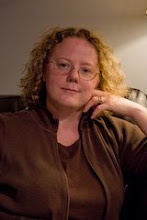
Hello, all, and welcome back to the Eclectic Library. The very short reason for four months of silence? A lack of time and a lack of focus....I was too busy to keep up with my own professional reading and just didn't have very much to say.
Suffice it to say, with spring comes refreshed thinking. In particular, this post from Nate Hill over at Catch and Release about a Library Outpost service model stopped me short and lit a fire under me. After you've finished reading my post (;^), go and check out his.
Nate's idea was to create Library Outposts in places where people are already congregating -- near business centers, schools, apartment complexes, etc. These would be streamlined library buildings, with little to no print material but lots of space for computers and events. With this in mind, here’s another idea for you: From those library outposts, as well as traditional branches, librarians can make forays out into even more targeted areas of the community. Send a “Librarian With a Laptop” into coffeeshops and other places with free wifi to raise awareness of library resources among entrepreneurs and self-employed freelancers, researchers and writers. Set up in a corner of the space with a tabletop display promoting the library’s services, the nearest branch or Outpost location, and a few bullet points of what the library offers. The librarian can showcase database offerings and catalog functionality and help answer reference on the fly.
Think of these roving librarians as another tier on your service model, one even more focused on serving patrons as individuals rather than on the building as the primary resource. You might even use such forays as proof-of-concept for your Outposts, by sending the roving librarian in first to stimulate interest in the area you’re thinking of putting an Outpost later.
I'm not the first person to think of this, not by a long shot, but it's such an easily-implementable idea that I'm going to share my version of it with you. Also, it does seem to be an initiative coming more from academic libraries rather than publics, but we can serve so many more of our patrons remotely in this same way.
Next post, the job description for this Librarian With a Laptop, public-library style.
Tuesday, March 25, 2008

Tuesday, November 27, 2007
Taming the Online Infoclutter presentation links
Just to have both versions of the presentation in one place:
Workshop for Boston Region
Cybertour from Internet Librarian 2007
One week of vacation and one week of holiday work seems to have added up to no posts for much of November. I guess I know what my New Year's resolution will be, eh?
Workshop for Boston Region
Cybertour from Internet Librarian 2007
One week of vacation and one week of holiday work seems to have added up to no posts for much of November. I guess I know what my New Year's resolution will be, eh?
Thursday, November 1, 2007
Uh-oh, our cover's blown!
Apparently, IL2007 made WoWInsider: Librarians Who Play World of Warcraft references the WoW Ladies LJ community, which references The Librarian in Black's coverage of the WoW session at IL2007.
More citations than my reference class paper, but there you have it. One more stroke against the school-marm librarian image, dangit, and I must say that I'm pleased. In fact, tomorrow morning, I'm going to repost the following call:
For a long while, I've been wanting to do a calendar of decidedly non-traditional looking librarians: tattoos, motorcycles, dreads, piercings, non-natural hair colors, cosplay/costumers, funky geeks, eclectic hippies, thrill-seekers, etc. I've got some connections amongst Boston-area photographers (and assorted oddballs), but I'd like it to be as global as possible.
So, who's in? Who's willing to be seen as an antidote to the bun-and-glasses type? I'm not asking anyone to reveal parts of themselves they'd prefer to keep personal, but if you're truly comfortable flying your colors in public, why don't you think about it?
Let's say this will be a 2009 calendar, eh? Who's in?
More citations than my reference class paper, but there you have it. One more stroke against the school-marm librarian image, dangit, and I must say that I'm pleased. In fact, tomorrow morning, I'm going to repost the following call:
For a long while, I've been wanting to do a calendar of decidedly non-traditional looking librarians: tattoos, motorcycles, dreads, piercings, non-natural hair colors, cosplay/costumers, funky geeks, eclectic hippies, thrill-seekers, etc. I've got some connections amongst Boston-area photographers (and assorted oddballs), but I'd like it to be as global as possible.
So, who's in? Who's willing to be seen as an antidote to the bun-and-glasses type? I'm not asking anyone to reveal parts of themselves they'd prefer to keep personal, but if you're truly comfortable flying your colors in public, why don't you think about it?
Let's say this will be a 2009 calendar, eh? Who's in?
Wednesday...and an attack of nerves
In theory, I was going to go to at least part of the two morning sessions, but the attack of nerves I inexplicably developed before my Cybertour short-circuited that. Which was annoying, because it meant I missed Mary Ellen Bates and Casey Bisson talking about their favorite and best topics. Rats.
The Cybertour itself went fabulously, with about 25 folks in the audience. A few came up afterwards to tell me how useful it was to get all of those organizing tips all in one place, which was the whole point. Of course, I managed to get the best feedback possible: "I really wish I could stay for your talk because it sounds great. Could I have your contact information?" Neat.
Remember, if you want to see everything I've done on the Infoclutter presentation, just click the tag over there on the right or follow this link. The slides are there, along with some ancillary material.
I did attend the afternoon sessions, but neither one was quite what I was looking for. (Here are the notes.) I've heard Chad Boeninger and Paul Rival both speak before, and their last session was a quick tour through the various free tech tools they use with their students. What they did that others didn't was a walk-through and demo of Jing, a downloadable multimedia snip-and-share program that seems like a breeze to use. It's definitely up high on the sandbox list for me, my copious free time of course.
The last session was originally about visual display search engines (neat!) but it was replaced by a lecture on meta data and topic maps. Interesting, but not what I was looking for.
And thus ended the conference. I hopped on the Monterey Airbus back to San Jose and slept the whole way home. Overall, it was a less heady experience than IL2006 had been, but in the year between I've gone from being amazed at what librarians are doing to being excited to see what I can help make happen myself.
But not today. Today I rest, and tomorrow...I'll see what comes. Enjoy!
The Cybertour itself went fabulously, with about 25 folks in the audience. A few came up afterwards to tell me how useful it was to get all of those organizing tips all in one place, which was the whole point. Of course, I managed to get the best feedback possible: "I really wish I could stay for your talk because it sounds great. Could I have your contact information?" Neat.
Remember, if you want to see everything I've done on the Infoclutter presentation, just click the tag over there on the right or follow this link. The slides are there, along with some ancillary material.
I did attend the afternoon sessions, but neither one was quite what I was looking for. (Here are the notes.) I've heard Chad Boeninger and Paul Rival both speak before, and their last session was a quick tour through the various free tech tools they use with their students. What they did that others didn't was a walk-through and demo of Jing, a downloadable multimedia snip-and-share program that seems like a breeze to use. It's definitely up high on the sandbox list for me, my copious free time of course.
The last session was originally about visual display search engines (neat!) but it was replaced by a lecture on meta data and topic maps. Interesting, but not what I was looking for.
And thus ended the conference. I hopped on the Monterey Airbus back to San Jose and slept the whole way home. Overall, it was a less heady experience than IL2006 had been, but in the year between I've gone from being amazed at what librarians are doing to being excited to see what I can help make happen myself.
But not today. Today I rest, and tomorrow...I'll see what comes. Enjoy!
Wednesday, October 31, 2007
IL2007 -- Tuesday presentations
A much better day of it today -- lots of fascinating programs and great speakers. And, to cap things off, an honest West Coast earthquake during the evening session! 5.6 on the scale, just north of San Jose. We felt a jolt, but not much more. My wishes for safety amongst those closer.
Here are today's notes.
First of all, if you can have Rebecca Jones come and speak to your senior management team about the importance of being a 2.0 organization, do it. She has an energy and a conviction about the process of being Library 2.0 that translates beautifully.
Equally engrossing, Meredith Farkas and Helene Bowers explained the ins and out of staff training via Library 2.0-type initiatives. As someone who's trying to be a part of such an initiative at my home institution, I paid close attention and got some excellent background thoughts. Now it's just time to turn it into a proposal and results.
In "I"m at Web 2.0, Are You?", Amanda Palmer of the American Bar Association outlined ways in which she enticed and supported non-tech-savvy folks into learning and applying 2.0 tools in their work. Given the potential audience for my trainings back home, this was vital information. As part of the same session, David Alsmeyer from BT Libraries went through the steps he's engaged in to reach an older, but already tech-savvy and well-educated population. After the session, I told him about my "Librarian with a Laptop" idea; it seemed to go over well.
The other speakers from today were less relevant, but interesting. Now, I must pack my bags and get a good night's sleep before tomorrow's presentation. More on this after the show!
Here are today's notes.
First of all, if you can have Rebecca Jones come and speak to your senior management team about the importance of being a 2.0 organization, do it. She has an energy and a conviction about the process of being Library 2.0 that translates beautifully.
Equally engrossing, Meredith Farkas and Helene Bowers explained the ins and out of staff training via Library 2.0-type initiatives. As someone who's trying to be a part of such an initiative at my home institution, I paid close attention and got some excellent background thoughts. Now it's just time to turn it into a proposal and results.
In "I"m at Web 2.0, Are You?", Amanda Palmer of the American Bar Association outlined ways in which she enticed and supported non-tech-savvy folks into learning and applying 2.0 tools in their work. Given the potential audience for my trainings back home, this was vital information. As part of the same session, David Alsmeyer from BT Libraries went through the steps he's engaged in to reach an older, but already tech-savvy and well-educated population. After the session, I told him about my "Librarian with a Laptop" idea; it seemed to go over well.
The other speakers from today were less relevant, but interesting. Now, I must pack my bags and get a good night's sleep before tomorrow's presentation. More on this after the show!
Monday, October 29, 2007
IL2007 -- Monday presentations
Chalk it up to poor sleep or that cold I've been fighting off since last week, but focus just was not my friend at today's session. Nor was the wireless in the conference center that just kept falling off my Mac's radar. Sigh.
As a result, the notes from today are a bit spotty, but you can find them here.
Blending In: Librarians in the Networked Community with Chrystie Hill & Michael Porter
I think I thought that this would be a more in-depth look at how librarians can be an active part of online communities on an individual level, but it was more about how the library website/institution can be a part of their patron's local lives.
Putting Evidence-Based Practice to Work, Frank Cervone, Northwestern University
Glitchy network connections interrupted the beginning of this talk for me, then I realized that it just wasn't telling me anything I didn't already know about the importance of showing your work.
Information Literacy in the Public Library, Alan D'Souza & Carol Bean
I really wish I'd gotten to this panel on time, but my watch stopped working during lunch. (Not my day for technology, apparently.) The second half of the presentation was useful, discussing different ways to train tech trainers and to work with older generations.
Integrating Libraries & Communities Online, Glenn Peterson & Marilyn Turner, Hennepin County Library and John Blyberg, Darien PL
An in-depth look at Hennepin's Bookspace.org and the present and future of the social OPAC. Good, useful stuff.
Now, I'm off to dinner and an early night. Tomorrow, more presentations. Ciao!
As a result, the notes from today are a bit spotty, but you can find them here.
Blending In: Librarians in the Networked Community with Chrystie Hill & Michael Porter
I think I thought that this would be a more in-depth look at how librarians can be an active part of online communities on an individual level, but it was more about how the library website/institution can be a part of their patron's local lives.
Putting Evidence-Based Practice to Work, Frank Cervone, Northwestern University
Glitchy network connections interrupted the beginning of this talk for me, then I realized that it just wasn't telling me anything I didn't already know about the importance of showing your work.
Information Literacy in the Public Library, Alan D'Souza & Carol Bean
I really wish I'd gotten to this panel on time, but my watch stopped working during lunch. (Not my day for technology, apparently.) The second half of the presentation was useful, discussing different ways to train tech trainers and to work with older generations.
Integrating Libraries & Communities Online, Glenn Peterson & Marilyn Turner, Hennepin County Library and John Blyberg, Darien PL
An in-depth look at Hennepin's Bookspace.org and the present and future of the social OPAC. Good, useful stuff.
Now, I'm off to dinner and an early night. Tomorrow, more presentations. Ciao!
IL2007 - Sunday Preconferences
Hi all! It's the beginning of the first full day of the conference, and we're about to kick things off. I just wanted to post my notes from yesterday's preconference workshops.
Training Adults: Getting and Keeping Attention
Rebecca Jones
Jones discussed the role of the trainer, different learning styles and ways of engaging these styles, dealing with resistance in the training session, and other challenges. I feel like this could have been a full-day workshop and it would have been more fulfilling -- Training 101 in the morning and 201 in the afternoon. However, I did get a number of useful tidbits from it overall.
Tips for Effective Change Agents
Roy Tennant
What an astoundingly useful workshop. Tennant covered the ways that change agents can work within their organizations, the attributes of change agents, coping mechanisms, dealing with recalcitrant staff and out-of-touch administrators, and more. The best thing for me was a checklist of tech and communication skills to work on over the next year:
Build a Basic Skill Set
- Know a programming language, just enough to do the basics of anything you want to do (Perl, PHP, Python, etc)
- Know XML, XHTML, CSS
- Know a basic indexer and/or database -- MySQL, SwishEnhance/Swishie, others?
- Have a place to work -- laptop/home machine, a server if you've got access to one
Build Communication Skills
- Summarizing and writing simply (re-read On Writing Well)
- Ability to simplify and show practical applications for technical topics
- Create diagrams & other modes of expressing visual information
- Facility with basic office software
- Ability to speak IT language, library language, administrator language and plain English or whatever the language of your key users is
Neat.
Okay. First presentation is over and it's on to the next room. Enjoy!
Training Adults: Getting and Keeping Attention
Rebecca Jones
Jones discussed the role of the trainer, different learning styles and ways of engaging these styles, dealing with resistance in the training session, and other challenges. I feel like this could have been a full-day workshop and it would have been more fulfilling -- Training 101 in the morning and 201 in the afternoon. However, I did get a number of useful tidbits from it overall.
Tips for Effective Change Agents
Roy Tennant
What an astoundingly useful workshop. Tennant covered the ways that change agents can work within their organizations, the attributes of change agents, coping mechanisms, dealing with recalcitrant staff and out-of-touch administrators, and more. The best thing for me was a checklist of tech and communication skills to work on over the next year:
Build a Basic Skill Set
- Know a programming language, just enough to do the basics of anything you want to do (Perl, PHP, Python, etc)
- Know XML, XHTML, CSS
- Know a basic indexer and/or database -- MySQL, SwishEnhance/Swishie, others?
- Have a place to work -- laptop/home machine, a server if you've got access to one
Build Communication Skills
- Summarizing and writing simply (re-read On Writing Well)
- Ability to simplify and show practical applications for technical topics
- Create diagrams & other modes of expressing visual information
- Facility with basic office software
- Ability to speak IT language, library language, administrator language and plain English or whatever the language of your key users is
Neat.
Okay. First presentation is over and it's on to the next room. Enjoy!
Sunday, October 28, 2007
A quick note regarding my InfoClutter slides
To Gwen and everyone else who's tried to click through to my Taming the Infoclutter slides since I posted about the presentation on the 18th: I botched the link for the Google Docs presentation. It's now fixed and should be accessible. Please let me know if you have any problems.
That'll teach me to not check my links. I usually do. I blame the elves.
That'll teach me to not check my links. I usually do. I blame the elves.
Internet Librarian, Ahoy!
Yup, I'm in Monterey at Interent Librarian.
Just for context, I'm sitting here in my first preconference workshop on training. I'll be blogging the conference, but I'll be doing summaries and highlights of each piece rather than a explosion of non-contextual information. I'll put all my notes up on a Google Docs page later on.
More later. But now, I mindmap!
Just for context, I'm sitting here in my first preconference workshop on training. I'll be blogging the conference, but I'll be doing summaries and highlights of each piece rather than a explosion of non-contextual information. I'll put all my notes up on a Google Docs page later on.
More later. But now, I mindmap!
Tuesday, October 23, 2007
For my own record, mostly
Earlier this year, Michael Wesch (a professor at KSU) posted a video definition of Web 2.0 on YouTube: The Machine Is Us/ing Us. As a quick overview and discussion starter, it's absolutely perfect.
This year, he's done it again: Information R/evolution focuses on the change in organizational thinking and behavior moving from paper to digital media, creating a video explanation of Weinberger's Everything is Miscellaneous. I'm hoping he cleans it up as he did with the first, but right now it gets the point across.
Neat! I may have to download all of his stuff to watch and comment on while flying out to Monterey...on Saturday! Yikes!
This year, he's done it again: Information R/evolution focuses on the change in organizational thinking and behavior moving from paper to digital media, creating a video explanation of Weinberger's Everything is Miscellaneous. I'm hoping he cleans it up as he did with the first, but right now it gets the point across.
Neat! I may have to download all of his stuff to watch and comment on while flying out to Monterey...on Saturday! Yikes!
Subscribe to:
Posts (Atom)